
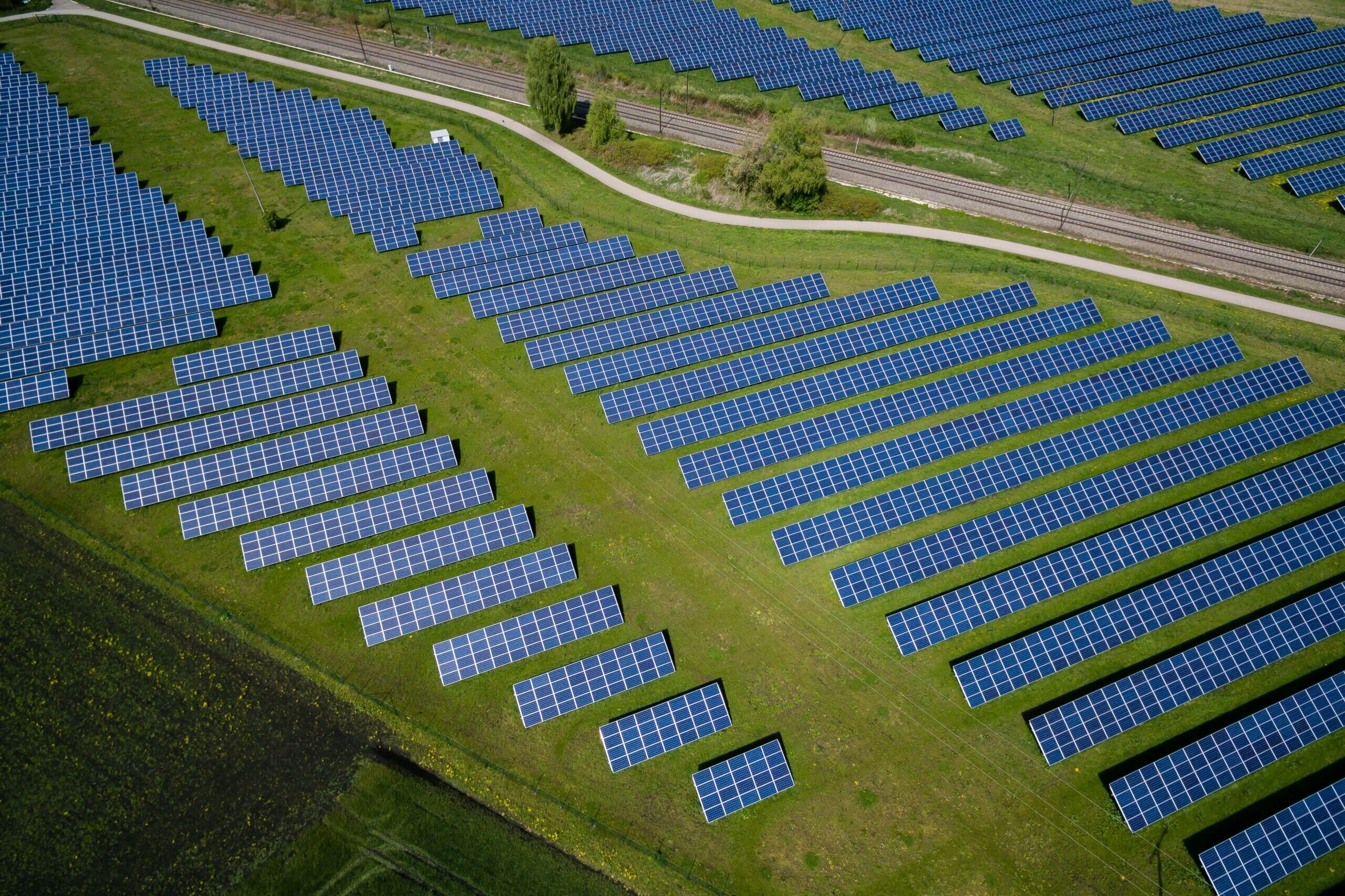
In utility-scale solar development, few tasks are as foundational to long-term success as utility-scale solar layout optimization. From initial site selection through final construction, the layout of solar arrays, access roads, electrical infrastructure, and ancillary equipment drives energy production, affects costs, and influences regulatory compliance and community support.
As the United States transitions toward a grid powered increasingly by renewable resources, more than one terawatt of solar capacity will be required to meet decarbonization goals by 2035. Planning and optimizing the layout of utility-scale solar facilities is essential to realize this vision efficiently and cost effectively.
This article examines the key principles behind utility-scale solar layout optimization, including the technical, environmental, and economic factors that guide successful design.
Why Layout Matters in Utility-Scale Solar
Utility-scale solar systems are typically installations larger than one megawatt, often encompassing hundreds or even thousands of acres. How the panels and supporting infrastructure are arranged across that land has a direct impact on:
- Energy generation potential
- Land use efficiency
- Construction cost and timeline
- Operations and maintenance efficiency
- Environmental compliance and community acceptance
Optimizing the layout involves balancing these factors to meet the performance expectations of the owner, the requirements of financiers, and the constraints of the site itself.
Site Selection: The First Step in Optimization
Before any design work begins, developers must select the most appropriate site for installation. This initial siting influences everything that follows.
The U.S. Department of Energy’s Solar Energy Technologies Office (SETO) provides research and guidance on siting utility-scale solar projects across diverse land types, including brownfields, agricultural land, and previously disturbed sites. Important considerations include solar resource availability, land terrain, and proximity to transmission infrastructure.
Optimal solar resource exposure is essential for maximizing energy yield. Tools such as the National Renewable Energy Laboratory’s (NREL) solar geospatial data resources provide solar irradiance maps and supply curves that help developers identify the highest-performing regions in the country.
Key siting considerations that influence utility-scale solar layout optimization include:
- Solar irradiance level: Areas with higher annual sunlight exposure produce more energy per panel.
- Terrain slope: Flatter terrain reduces grading costs and panel orientation complexity.
- Land cover and restrictions: Avoiding environmentally sensitive areas and complying with local zoning rules improves permitting outcomes.
- Distance to grid and transmission infrastructure: Closer sites reduce interconnection costs and line losses.
Design Principles for Layout Optimization
Once a site is selected, designers apply detailed technical principles to maximize energy production while minimizing costs.
1. Panel Orientation and Spacing
The orientation and spacing of solar panels significantly influence energy capture and shading impacts. Panels are typically oriented southward in the northern hemisphere to capture the most direct sunlight throughout the year. Spacing must accommodate:
- Sun path: Ensuring that rows do not shade each other, especially during winter when the sun is lower in the sky.
- Maintenance access: Allowing enough space for vehicles and crews to perform inspections and repairs.
- Topography: Adjusting spacing on slopes to maintain consistent solar access.
Proper orientation and spacing improve energy yield while preserving land use efficiency.
2. Tracking Systems vs Fixed Tilt
Many utility-scale solar projects use tracking systems that follow the sun’s path throughout the day. These systems increase energy generation compared to fixed tilt arrays by keeping panels aligned with peak solar exposure. The trade-off is added complexity in mechanical systems and potentially increased construction and maintenance costs.
Utility-scale solar layout optimization must evaluate whether the increased energy production from tracking systems justifies the additional capital and operational expenditures.
3. Electrical Infrastructure Placement
Efficient placement of inverters, combiner boxes, substations, and cabling reduces electrical losses and simplifies construction. Shorter cable runs between panels and inverters reduce copper usage and decrease power loss. Optimization also considers:
- Ground conditions: Avoiding areas prone to flooding or poor soil stability.
- Future expansion: Planning space for additional capacity or energy storage integration.
Electrical layout optimization is a balance between performance, cost, and serviceability.
4. Land Use and Environmental Constraints
Optimal layouts work with the land, not against it. This means avoiding environmentally sensitive areas like wetlands, steep slopes, and protected habitats. Efficient use of land also considers minimizing soil disturbance and preserving natural drainage patterns.
In partnership with DOE research and tools, developers can overlay environmental constraints with solar resource data using geospatial tools to find balanced layouts before detailed designs begin.
Advanced Tools for Layout Optimization
Optimizing utility-scale solar layouts is a data-driven process. Modern software and data tools combine solar resource maps, topographic information, and system modeling to simulate different configurations and calculate projected energy output.
Tools such as:
- Geospatial data sets from NREL provide solar radiation and resource maps that inform design choices.
- Geographic Information Systems (GIS) allow designers to layer resource, environmental, and infrastructure data to evaluate thousands of layout scenarios.
- Custom optimization algorithms help identify the best trade-offs between shading, panel count, spacing, and terrain irregularities.
These tools make utility-scale solar layout optimization more precise, repeatable, and transparent.
Balancing Energy Yield and Cost
An optimized layout does not simply pack the most panels into a site. Instead it maximizes net energy yield per cost unit over the project life. Over-dense layouts may yield more capacity but also increase shading, complicate construction, and hinder maintenance.
Effective layout optimization accounts for:
- Annual energy production vs. capital cost
- Operations and maintenance expenses over decades
- Performance degradation with time
- Land lease costs and opportunity costs of land use
This balanced approach helps owners and financiers achieve reliable returns and predictable performance.
Stakeholder Engagement and Local Considerations
Utility-scale solar projects must navigate permitting, zoning, and community concerns. An optimized layout anticipates stakeholder questions around aesthetics, ecological impacts, and land use. Early engagement with local governments and landowners can surface issues that influence layout choices, such as:
- Wildlife habitats that require buffer zones
- Agricultural land use considerations
- Proximity to residential areas
Integrating stakeholder input with technical optimization leads to better outcomes for all parties.
Implementation Best Practices
For solar developers, EPC firms, and owners seeking to execute an optimized utility-scale solar project layout, the following best practices can improve results:
- Start with high-resolution solar irradiance and topographic data to ensure you are designing from the strongest possible baseline.
- Use geospatial and GIS modeling tools to visualize competing constraints concurrently.
- Test multiple layout scenarios to identify performance and cost trade-offs.
- Collaborate across disciplines including engineering, environmental science, and construction to align technical and practical considerations early.
- Document decisions so that owners, operators, and financiers understand why certain layout choices were made.
Conclusion
Utility-scale solar layout optimization is a critical step in delivering high-performance photovoltaic power plants. It requires integrating solar resource data, land characteristics, electrical design, regulatory constraints, and construction considerations to achieve a design that maximizes energy production while controlling costs, environmental impacts, and project risk.
Leveraging data from resources provided by the U.S. Department of Energy and the National Renewable Energy Laboratory enhances decision-making and supports developers in navigating complex trade-offs inherent in utility-scale solar projects.
Whether you are planning your first utility-scale project or optimizing an existing design, focusing on utility-scale solar layout optimization yields dividends in energy output, cost efficiency, and long-term asset performance.