
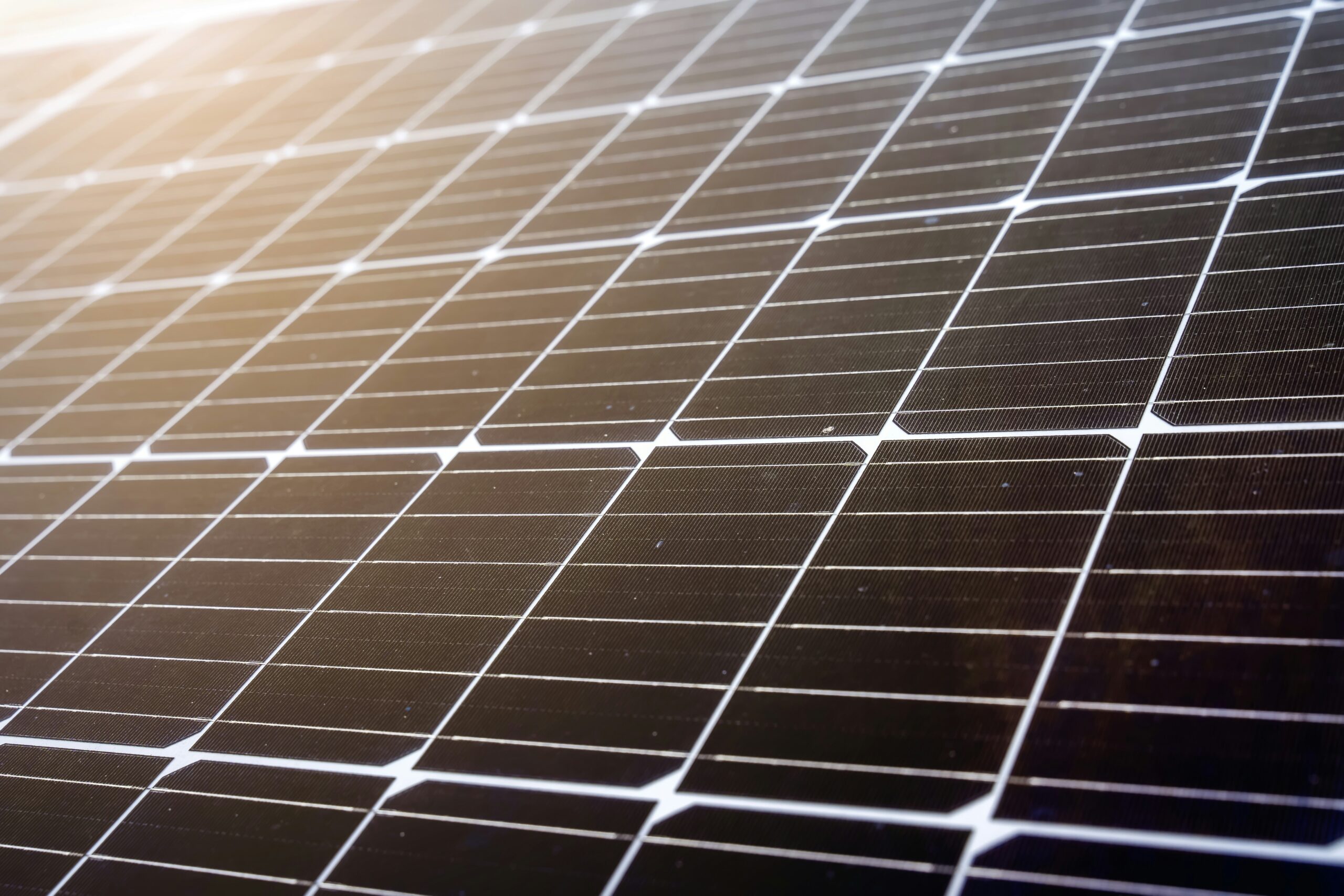
For decades, the conversation about utility-scale solar development in rural communities centered on a single trade-off: farmland goes solar, farming stops. Landowners weighing solar lease offers understood that the land under a solar array would be removed from agricultural production for the duration of the lease, typically twenty to thirty years. That calculation made solar a complicated proposition for landowners who depended on the land for active farming operations or who wanted to preserve agricultural options for future generations.
Agrivoltaics changes that calculation. It is the practice of co-locating solar energy production and agricultural activity on the same parcel of land simultaneously, using the space under and around solar arrays for crop production, livestock grazing, pollinator habitat, or other agricultural uses. The result is a system that generates electricity and agricultural value from the same land at the same time, rather than forcing a choice between the two.
For solar developers, landowners, agricultural operators, and solar construction contractors working in rural markets, agrivoltaics represents a meaningful shift in how utility-scale solar projects are designed, built, and managed.
What Agrivoltaics Actually Involves
The term agrivoltaics covers a range of configurations and agricultural uses, from relatively simple approaches to more engineered designs. Understanding the spectrum helps clarify what a given project involves and what it requires from a construction and installation standpoint.
Pollinator and native plant habitat is the most common and most straightforward agrivoltaic application. Rather than maintaining a conventional turfgrass ground cover under solar arrays, pollinator-friendly arrays seed the land with native wildflowers, clovers, and grasses that provide habitat for bees, butterflies, and other pollinators. This approach requires minimal changes to the array design or installation process and provides documented ecological benefits. Several states now offer incentives or require pollinator habitat under utility-scale solar arrays as a condition of permitting.
Sheep grazing is widely used for vegetation management under solar arrays and is considered one of the easiest agrivoltaic integrations to implement. Sheep are well-suited to solar sites because they are small enough to move freely under standard racking heights, are effective at controlling vegetation growth between and beneath panels, and do not damage equipment the way larger livestock can. Solar grazing reduces mowing costs, eliminates the need for herbicide applications, and provides income to livestock operators who graze their flocks on solar sites.
Crop production under elevated arrays is a more engineered approach that involves raising the solar array height and adjusting row spacing to allow the passage of farm equipment and sufficient sunlight for crop growth beneath the panels. Certain crops, particularly shade-tolerant vegetables, small fruits, and specialty crops, can thrive in the partial shade created by solar panels while reducing water demand compared to full-sun cultivation. Research at universities across the United States has documented successful production of crops including tomatoes, peppers, leafy greens, and herbs under elevated solar arrays.
Beekeeping on solar sites provides habitat and forage for managed honeybee colonies while supporting the pollination needs of surrounding agricultural lands. Beekeeping on solar sites is compatible with most array configurations and adds income potential for agricultural operators.
Our post on Large-Scale Solar Farms: Building the Foundation for Power covers the construction fundamentals of utility-scale solar projects, including site layout and ground cover management, which form the baseline that agrivoltaic designs build upon.
The Research Case for Agrivoltaics
Agrivoltaics is not just a conceptual idea. It is supported by a growing body of peer-reviewed research demonstrating measurable benefits for both solar energy production and agricultural outcomes.
Studies conducted at the University of Massachusetts Amherst, Oregon State University, and other research institutions have documented that certain crops grown in the partial shade of solar arrays show reduced water stress during heat events, maintain productivity comparable to full-sun cultivation for shade-tolerant species, and in some cases outperform full-sun equivalents during drought conditions because the shade provided by panels reduces evapotranspiration demand.
From the solar side, research has shown that shading from vegetation and the cooling effect of evapotranspiration from actively growing plants beneath solar arrays can reduce panel operating temperatures, which improves energy conversion efficiency. Solar panels operate less efficiently as their temperature rises, so the cooling effect of active agricultural land use can translate into measurable production gains compared to arrays sited over bare soil or conventional grass.
The U.S. Department of Energy’s Office of Energy Efficiency and Renewable Energy has funded and published research on agrivoltaic systems, including studies of optimal array configurations for dual use, crop compatibility, and the economic implications of combining solar and agricultural income streams. More information on DOE’s agrivoltaics research is available at energy.gov.
Construction and Design Implications
Agrivoltaic solar projects involve construction and design considerations that differ from conventional utility-scale solar, and understanding these differences is important for developers, landowners, and construction contractors planning this type of project.
Array height. Standard utility-scale solar arrays using single-axis trackers typically have a module clearance height above grade of three to four feet at the lowest point of tracker rotation. This clearance is sufficient for sheep grazing and pollinator plantings but does not accommodate farm equipment or tall crop production. Agrivoltaic designs intended for active crop production require elevated racking that raises the module clearance to eight feet or more, allowing standard agricultural equipment to pass beneath the array. The higher racking requires stronger foundations, more robust structural components, and additional material cost compared to standard configurations.
Row spacing. Conventional utility-scale solar row spacing is optimized for energy production, balancing shading losses from adjacent rows against land use density. Agrivoltaic designs for active crop production typically require wider row spacing than energy-optimized designs to allow sufficient sunlight to reach crops in the inter-row spaces. This wider spacing reduces the energy production density of the array per acre but improves agricultural light availability.
Ground preparation. Seeding for pollinator habitat or pasture grazing requires different ground preparation than conventional solar sites. Rather than establishing a standard turf cover or applying pre-emergent herbicide, pollinator projects require seed bed preparation, species-appropriate seed mixes, and establishment management during the first growing season. Construction sequencing must account for seeding timing relative to project completion to establish cover before the first mowing season.
Fencing. Sheep grazing on solar sites requires perimeter and internal fencing sufficient to contain livestock and manage grazing rotation. Fencing installation must be coordinated with the array construction sequence to avoid conflicts with module delivery, racking installation, and electrical work.
Our post on Grading and Civil Work for Utility-Scale Solar: Setting the Stage covers how the civil and grading scope on a solar project sets up every subsequent installation phase, including the ground preparation decisions that are particularly important for agrivoltaic sites where the post-construction land use depends on how the site was graded and seeded.
Permitting and Policy Landscape for Agrivoltaic Projects
The permitting environment for agrivoltaic solar projects varies significantly by state and county, and it is evolving rapidly as awareness of dual-use solar grows and regulators work to update frameworks that were developed before agrivoltaics was a common project type.
Several states have adopted agrivoltaic-specific policies that either incentivize or require dual-use designs for solar development on agricultural land. Illinois, Massachusetts, Minnesota, and New York have implemented programs that provide additional renewable energy incentives for solar projects that incorporate agricultural land use. North Carolina, where much of Ansgar Solar’s work is concentrated, has an active agricultural land preservation community that is increasingly engaged with agrivoltaic project design as a way to maintain some agricultural use of land that enters solar leases.
County-level zoning and land use regulations are often the most immediate regulatory consideration for agrivoltaic projects. Many counties that allow utility-scale solar on agricultural land impose conditions related to vegetation management, impervious surface limits, and land use that agrivoltaic designs can help satisfy. Working with local planners and agricultural extension services early in the project development process helps identify permitting requirements and community expectations that can shape the project design.
The U.S. Department of Agriculture (USDA) has engaged with agrivoltaics through its research and extension programs, recognizing dual-use solar as a tool for supporting agricultural viability in rural communities. More information on USDA’s engagement with agrivoltaic farming systems is available at usda.gov.
Our post on Environmental Compliance in Utility-Scale Solar covers the environmental permitting and compliance requirements that govern utility-scale solar construction, including the vegetation management and land use conditions that agrivoltaic designs can help address.
Economic Considerations for Landowners and Developers
Agrivoltaics changes the economic model of a solar land lease in ways that are meaningful to landowners, developers, and agricultural operators.
For landowners, the most direct economic benefit is the ability to maintain some agricultural income or land use value during the solar lease term. A solar lease that allows grazing or crop production provides a secondary income stream alongside the lease payments. For landowners who are active farmers or who lease land to agricultural tenants, maintaining some agricultural use preserves farming relationships and avoids the complete removal of land from the local agricultural economy for the lease duration.
For developers, agrivoltaic designs can facilitate permitting in jurisdictions that are sensitive to the loss of agricultural land, improve community relations in rural areas where solar development faces opposition, and in some markets access additional incentives or favorable treatment under state renewable energy programs that value dual-use solar.
The incremental construction cost of an agrivoltaic design, primarily the higher racking cost and wider row spacing for crop production systems, must be weighed against these benefits. For pollinator and grazing applications, the incremental cost is relatively modest. For full crop production systems with significantly elevated racking, the cost premium is more substantial and must be supported by the project economics.
Our post on Pre-Construction Site Assessments for Utility Scale Solar covers how pre-construction assessment informs project design decisions, including the soil quality, hydrology, and agricultural suitability data that are particularly relevant for agrivoltaic project planning.
What the Future of Agrivoltaics Looks Like
Agrivoltaics is one of the fastest-growing areas of innovation in the solar industry, and the pace of research, policy development, and commercial project deployment is accelerating. As more data accumulates from operating agrivoltaic projects, the industry’s understanding of which crop and livestock combinations work best in different climates, which array configurations optimize the balance between energy production and agricultural output, and how agrivoltaic economics compare to conventional solar and conventional agriculture will continue to improve.
For solar construction contractors, developers, and landowners in rural markets, staying current with agrivoltaic developments is increasingly important as more projects incorporate dual-use designs and as permitting bodies in agricultural states begin to favor or require them. The ability to plan, design, and build agrivoltaic solar projects is becoming a meaningful competitive differentiator in rural solar markets.
Our post on Diverse Industry Experience for Solar Installations covers how broad construction experience across different project types and site conditions enables better problem-solving on projects with non-standard design requirements, which describes many agrivoltaic installations that combine solar construction with active land management considerations.