
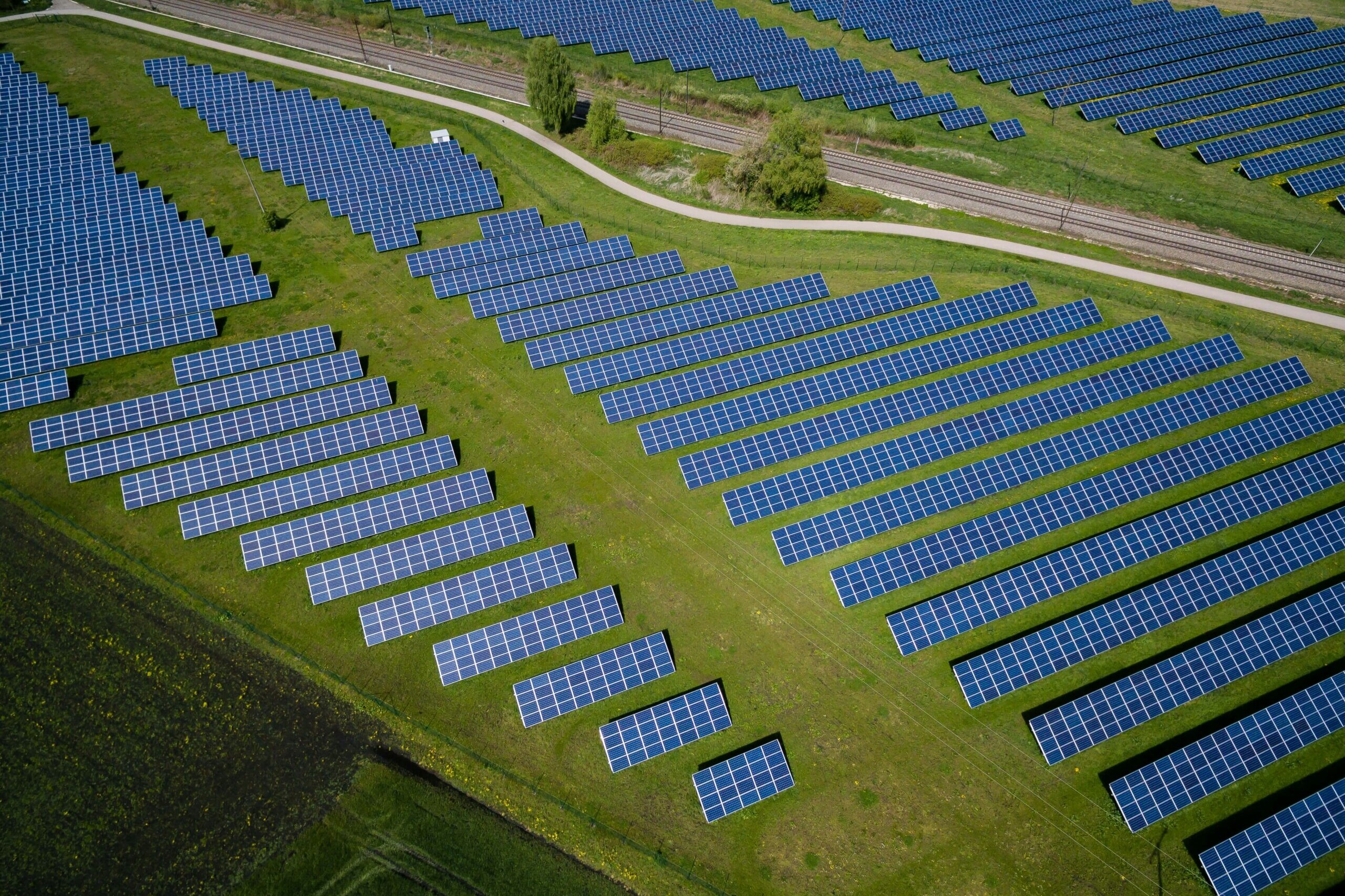
The work of building a utility-scale solar project does not end when the last module is racked and the system is energized. The land beneath and around the array has been graded, compacted, disturbed, and reshaped over the course of construction, and in that condition it is vulnerable. Without adequate erosion control and a successful vegetation establishment program, a project site that was environmentally permitted and carefully constructed can become a source of ongoing sediment discharge, permit violations, and costly remediation work for years after the ribbons are cut.
Erosion control and vegetation establishment for utility-scale solar is one of the most consistently underestimated scopes in solar construction. It is often treated as a simple landscaping task that follows construction, rather than as an integrated environmental compliance obligation that runs throughout the project and must be planned and executed with the same rigor as the electrical and mechanical scopes. Getting it right protects the project’s operating permits, satisfies the conditions of the stormwater permit, and in many cases is a contractual requirement imposed by the landowner, the county, or the state environmental agency.
Why Erosion Control Matters on Solar Construction Sites
A utility-scale solar project disturbs a large area of land over an extended construction period. During that period, the site is stripped of its natural vegetation cover, graded to establish design elevations, and compacted by heavy equipment. The disturbed soil, exposed to rainfall without protective vegetation, is highly susceptible to surface erosion that carries sediment into drainage channels, streams, and wetlands.
The consequences of inadequate erosion control extend beyond environmental impact. Sediment that leaves the site and enters regulated waterways is a Clean Water Act violation that can trigger regulatory enforcement, stop-work orders, and monetary penalties. Sediment that accumulates in detention ponds and drainage channels on the site must be removed, often at significant cost. Sediment that erodes from beneath array foundations and cable trenches can undermine structural and electrical integrity.
Erosion control and vegetation establishment is not just a post-construction concern. Erosion risk is highest during active construction, when the largest areas are simultaneously disturbed, vegetation cover is absent, and construction traffic is compacting soils and concentrating runoff. A site that is well-managed during construction arrives at final stabilization with less accumulated erosion damage to remediate.
Our post on Grading and Civil Work for Utility-Scale Solar: Setting the Stage covers how grading and drainage design during civil work sets up the site’s long-term drainage patterns, including the slopes, drainage channels, and detention structures that the erosion control and vegetation program must protect and maintain.
Regulatory Framework: NPDES and the Construction General Permit
The primary regulatory framework governing erosion control on utility-scale solar construction sites is the National Pollutant Discharge Elimination System (NPDES) program administered by the U.S. Environmental Protection Agency (EPA) and delegated to state environmental agencies in most states.
Construction projects that disturb one or more acres of land must obtain coverage under the NPDES Construction General Permit (CGP) or the equivalent state stormwater permit. Permit coverage requires the development and implementation of a Stormwater Pollution Prevention Plan (SWPPP) that identifies all potential stormwater pollution sources, documents the best management practices (BMPs) that will be used to control them, and establishes an inspection and maintenance schedule.
The SWPPP must be site-specific and must be updated as conditions change during construction. It must document the erosion and sediment control BMPs installed at each stage of construction, the schedule for stabilization of disturbed areas, and the procedures for maintaining BMPs in effective condition throughout the permit term.
Final permit coverage typically ends when the site achieves final stabilization, which under the EPA’s Construction General Permit means that all disturbed areas have been vegetated with a uniform perennial cover with a density of at least 70 percent of the pre-disturbance levels, or equivalent permanent stabilization measures have been applied. More information on NPDES Construction General Permit requirements and final stabilization standards is available at epa.gov.
Erosion Control During Construction: BMPs That Must Be in Place
Effective erosion control and vegetation establishment begins with a robust set of erosion and sediment control BMPs that are installed before grading begins and maintained throughout construction. Several categories of BMPs are standard on utility-scale solar sites.
Perimeter sediment controls including silt fencing, fiber rolls, and sediment logs are installed along the site boundary and at internal drainage points before grading begins. These controls capture sediment before it leaves the disturbed area and must be maintained in effective condition throughout construction. Damaged silt fencing, accumulated sediment at retention points, and perimeter controls overwhelmed by storm events must be repaired promptly and documented in the SWPPP inspection log.
Stabilized construction entrances prevent tracking of mud and sediment from the site onto public roads, where it can enter storm drains and regulated waterways. Entrances must be maintained with adequate aggregate depth and cleaned when tracking is observed.
Temporary sediment basins and traps capture runoff from large disturbed areas before it leaves the site. These structures must be properly sized for the drainage area they serve and must be inspected and cleaned after significant storm events to maintain their design capacity.
Slope stabilization measures including erosion control blankets and hydraulic mulch are applied to disturbed slopes that cannot be immediately seeded, particularly on steeper grades where surface erosion rates are highest. These temporary measures protect the soil surface until vegetation is established.
Temporary seeding of disturbed areas that will not receive final construction activity for an extended period provides temporary vegetative cover that significantly reduces erosion rates compared to bare soil. Temporary seed mixes typically include fast-germinating annual or perennial grasses specified by the SWPPP.
Our post on Environmental Compliance in Utility-Scale Solar covers the environmental permit conditions that govern utility-scale solar construction, including the stormwater permit requirements that make erosion control a legal obligation throughout the construction period.
Permanent Vegetation Establishment: The Post-Construction Phase
Permanent vegetation establishment is the transition from temporary erosion controls to a stable, self-sustaining vegetative cover that provides long-term erosion protection and satisfies the final stabilization requirements of the stormwater permit. This transition requires planning that begins during project design, not after construction is complete.
Seed mix selection is one of the most consequential decisions in the vegetation establishment program. The seed mix must be appropriate for the regional climate, the soil conditions on the site, and any environmental permit conditions that specify native species, pollinator habitat, or other specific vegetation requirements. A seed mix that germinates poorly in the local climate, or that is dominated by invasive species that crowd out desirable species over time, will fail to achieve the 70 percent cover density required for final stabilization and will require costly re-seeding.
Many utility-scale solar projects now include pollinator-friendly seed mixes as a condition of state permitting or as a voluntary commitment to improve the project’s environmental profile. These mixes include native wildflowers, clovers, and grasses that provide habitat and forage for pollinators while meeting the erosion control requirements of the stormwater permit. Establishing a diverse native seed mix requires more careful seedbed preparation and management than a simple grass mix, but produces a more ecologically valuable and visually distinctive ground cover.
Seedbed preparation before seeding must achieve adequate soil contact for germination. Compacted soils that have been disturbed by heavy equipment during construction may need scarification or light tillage to create conditions that support seed germination and root establishment. Excessive soil compaction reduces infiltration rates, increases runoff, and limits root development in ways that compromise vegetation establishment even when seed germination is initially adequate.
Seeding timing must align with the appropriate planting window for the selected seed mix in the local climate. Cool-season grasses and many native wildflowers germinate best in fall or early spring. Warm-season grasses establish more successfully with spring and summer seeding. Seeding outside the appropriate window for the selected species reduces germination rates and increases the risk of establishment failure.
Our post on Agrivoltaics: How Solar and Farming Can Share the Same Land covers how agricultural and ecological ground cover approaches are integrated with solar array design, including the species selection and establishment considerations that apply when the ground cover serves both erosion control and agricultural or pollinator habitat functions.
Vegetation Monitoring and Adaptive Management
Achieving 70 percent vegetative cover is not a single event. It is an outcome that develops over one to three growing seasons depending on the seed mix, soil conditions, rainfall patterns, and establishment management practices. Monitoring the progress of vegetation establishment and responding to failure areas before they become erosion problems is essential to achieving final stabilization within the expected timeframe.
A vegetation monitoring program for a utility-scale solar project typically includes quarterly site walkdowns during the growing season, photographic documentation of representative areas, assessment of cover density relative to the 70 percent threshold, identification of bare or failing areas that require remediation, and documentation of monitoring results in the SWPPP.
Bare areas that persist despite initial seeding require investigation to determine the cause before re-seeding. Soil compaction, pH imbalance, weed pressure, drainage problems, or inappropriate seed mix selection each requires a different remediation approach. Re-seeding a bare area with the same mix that failed to establish, without addressing the underlying cause, is unlikely to produce a different result.
Weed management during establishment is a critical component of the vegetation program that is frequently underestimated. Invasive species that colonize disturbed soil before the desired species establish can outcompete the seeded species and prevent the community from reaching the target composition and density. Selective herbicide application, hand-pulling, or mowing can manage weed pressure during establishment without damaging desirable species.
The U.S. Department of Agriculture’s Natural Resources Conservation Service (NRCS) provides region-specific technical guidance on soil health, erosion control, and vegetation establishment practices for disturbed lands, including guidance applicable to solar site revegetation. NRCS Plant Materials Centers develop and distribute locally adapted seed mixes appropriate for different soil types and climate zones. More information on NRCS erosion control and vegetation establishment resources is available at nrcs.usda.gov.
Long-Term Vegetation Management as an O&M Scope
Once permanent vegetation is established and the stormwater permit is closed out, vegetation management transitions from an environmental compliance scope to an ongoing operations and maintenance responsibility. The established plant community must be maintained to prevent shading, provide access, and sustain the ecological value of pollinator plantings.
Mowing frequency depends on the vegetation type and the project’s operational requirements. Native grass and wildflower mixes may require only one or two mowing cycles per year, typically after the growing season, while maintaining their erosion control function and pollinator value. Dense cool-season turf may require more frequent mowing.
Invasive species management remains a requirement throughout the project’s operating life in most regions. Annual monitoring and targeted management of invasive species prevents them from overtaking the established native community and degrading the ecological function of the ground cover.