
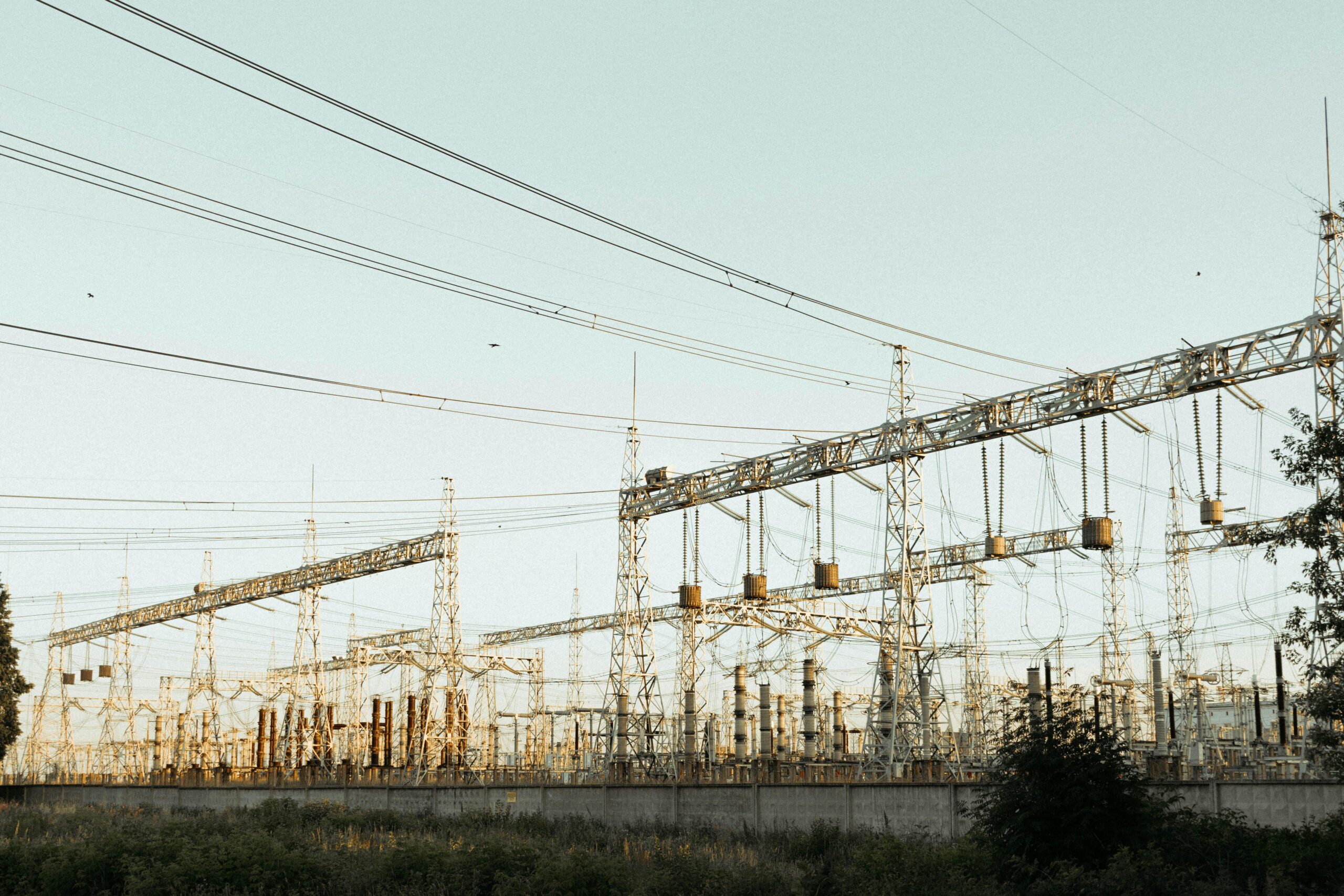
A solar array without a functioning grid connection is just a field of panels. The work of turning generated electricity into delivered power runs through substation and interconnection infrastructure, and for solar contractors, developers, and owners, understanding how this infrastructure works, who is responsible for it, and how it affects project timelines is one of the most important pieces of the utility-scale puzzle.
Interconnection is consistently one of the longest lead-time items in a solar project. Delays tied to substation design, equipment procurement, utility coordination, and permitting have pushed project timelines by months or even years on large-scale developments. For contractors involved in construction phasing, schedule management, and site buildout, having a working knowledge of interconnection infrastructure is essential to planning your scope around a timeline you do not fully control.
What Is Substation and Interconnection Infrastructure?
In the context of a solar project, substation and interconnection infrastructure refers to the electrical equipment and systems that step up the voltage produced by the solar array to the level required by the transmission or distribution grid, and physically connect the project to the utility’s network.
A typical utility-scale solar project involves two primary electrical interfaces: the collection system, which gathers energy from the inverters and delivers it to the project substation, and the point of interconnection (POI), where the project substation connects to the utility’s transmission or distribution system.
The project substation is the hub of this infrastructure. It typically includes:
- A step-up power transformer, which increases voltage from the collection system level (often 34.5 kV) to the transmission level (often 115 kV, 138 kV, or higher depending on the region)
- High-voltage switchgear and circuit breakers for protection and isolation
- Revenue-grade metering equipment required by the utility for billing and settlement
- SCADA and communication systems that allow the utility to monitor and control the project remotely
- Protective relay systems that detect faults and disconnect the project from the grid when required
The interconnection itself refers to the physical tie between the project substation and the utility’s existing transmission or distribution infrastructure, which may involve a new transmission line, a tap to an existing line, or a direct connection to an existing substation.
Who Owns What: Developer vs. Utility Responsibilities
One of the most common sources of confusion on solar projects is understanding where the developer’s responsibility ends and the utility’s begins. This line varies by utility, by interconnection agreement, and by the specific design of the project, but a general framework applies in most cases.
The developer is typically responsible for designing, procuring, and building everything up to and including the project substation. This includes the collection system, the step-up transformer, the high-voltage switchgear, the revenue meter, and the protection systems required by the utility’s interconnection technical requirements.
The utility is typically responsible for any upgrades to its own transmission system required to accommodate the new generation, which may include new transmission lines, upgrades to existing substations, or reinforcement of the broader grid. These are called network upgrades, and they are one of the primary cost and schedule variables in the interconnection process. Depending on the study outcome, network upgrades can range from minimal to tens of millions of dollars, and the developer is typically required to fund them even though the utility owns and operates the resulting infrastructure.
The Federal Energy Regulatory Commission (FERC), through its open access transmission rules and interconnection reform proceedings, governs the interconnection process for projects connecting to transmission systems regulated at the federal level. FERC’s interconnection rules establish the study process, the timeline requirements for utilities, and the rights of project developers throughout the queue. More information on FERC’s interconnection regulations and recent reform efforts is available at ferc.gov.
The Interconnection Queue Process
Getting a solar project interconnected to the grid requires working through the utility’s interconnection queue, a formal process governed by the utility’s tariff and, for transmission-level projects, by FERC regulations. Understanding this process is critical for project scheduling because the queue timeline is largely outside the developer’s control.
The process typically begins when the developer submits an interconnection application and pays a deposit to the utility. The utility then conducts a series of power flow and stability studies to assess the impact of the new generation on its system and to determine what, if any, network upgrades are required.
These studies are conducted in sequence across multiple projects in the queue, which means a project’s study timeline is affected by how many other projects are ahead of it and how complex those upstream projects are. Queue interconnection reform has been a major topic at FERC in recent years specifically because backlogs have grown severe in high-demand regions, with some projects waiting five or more years to complete the study process.
Once studies are complete and the interconnection agreement is executed, the developer can move forward with detailed substation design and equipment procurement. The interconnection agreement specifies the technical requirements the project must meet, the testing that must be completed before energization, and the operational requirements the project must follow in service.
For contractors working on the construction side, the practical implication is that the interconnection agreement and the utility’s technical requirements drive the detailed design of the project substation. Nothing in the substation can be finalized until the interconnection agreement is in place, which is why substation design and procurement often run on a parallel track to the rest of construction and frequently become the critical path item that determines the project’s commercial operation date.
Key Equipment and Long Lead Times
The power transformer is the single most schedule-sensitive piece of equipment in a solar project’s substation. Large power transformers are manufactured by a limited number of suppliers globally, and lead times for utility-scale transformers have stretched significantly in recent years due to supply chain constraints and growing demand from both new generation projects and grid modernization programs.
Lead times for large power transformers commonly range from 12 to 24 months or longer, depending on the voltage rating, the MVA capacity, and the manufacturer. For project developers and contractors, this means transformer procurement cannot wait for the interconnection agreement to be fully executed. Many developers opt to place transformer orders based on preliminary specifications, accepting some level of specification risk in exchange for protecting the project schedule.
Other long-lead equipment in the substation includes high-voltage circuit breakers, power meters, and protection relays. While these typically have shorter lead times than the transformer, they still require early identification and procurement to avoid becoming a schedule constraint as commissioning approaches.
Our post on Key Milestones to Track for Solar Construction covers how major procurement milestones fit into the overall project schedule and why tracking them proactively is essential to avoiding delays at the end of the project.
Substation Design Considerations for Solar Projects
Substation design for a solar project involves decisions that affect cost, reliability, maintainability, and the utility’s willingness to approve the design. Several considerations are worth understanding for anyone involved in project development or construction.
Bus configuration refers to how the high-voltage equipment within the substation is arranged. Common configurations include single bus, main-and-transfer bus, and breaker-and-a-half arrangements. The utility’s technical requirements will often specify a minimum bus configuration based on the project’s size and the reliability requirements of the transmission system it connects to. More robust configurations provide greater operational flexibility but at higher equipment and construction cost.
Protection coordination is one of the most technically complex aspects of substation design. The protection systems in the project substation must coordinate with the utility’s existing protection schemes so that a fault on the project does not affect the rest of the grid, and vice versa. The utility’s interconnection technical requirements will specify protection functions and relay settings that the project must implement, and these requirements must be incorporated into the design from the start.
SCADA and communication requirements have grown significantly as utilities seek greater visibility and control over distributed generation resources. Modern interconnection agreements often require solar projects to provide real-time telemetry to the utility’s control center, participate in automatic generation control (AGC), and support curtailment commands from the grid operator. Communication infrastructure, including fiber optic links or microwave systems, must be designed and installed as part of the project.
Site grounding is a safety-critical element of substation design that is sometimes underestimated. The grounding system must be designed to limit step and touch potentials during fault conditions to levels safe for personnel working in and around the substation. This typically requires a soil resistivity study and a ground grid design that meets IEEE Standard 80 requirements.
Commissioning and Energization
Once the substation is built and all equipment is installed, the project must complete a commissioning and testing sequence before the utility will authorize energization. This process verifies that all protection systems are functioning correctly, that communications are operational, and that the project meets the technical requirements specified in the interconnection agreement.
Commissioning for the substation typically includes factory acceptance testing (FAT) of the transformer and major equipment, site acceptance testing (SAT) after installation, relay testing and coordination verification, communications testing with the utility’s control center, and a final witness test in the presence of the utility before the project is authorized to inject power into the grid.
The timing of utility witness testing can be a schedule risk if not coordinated early. Utilities have limited resources for interconnection commissioning activities, and scheduling conflicts can result in delays of several weeks if the developer does not engage the utility’s interconnection team well in advance of the target energization date.
Our post on Construction Phasing in Utility-Scale Solar: Prep to Energization covers how the energization milestone fits into the broader construction phase sequence and how to coordinate substation commissioning with the rest of the project’s closeout activities.
How Interconnection Infrastructure Affects the Broader Construction Schedule
For solar contractors managing large-scale site construction, interconnection infrastructure affects scheduling in several specific ways that are worth planning around from the start.
The project substation is typically located near the point of interconnection, which may be at the edge of the project site or at a separate location connected by a short transmission line. Substation civil work, including grading, gravel, fencing, and concrete foundations, can begin once the site is mobilized and the substation layout is finalized. But electrical installation cannot begin in earnest until equipment is delivered, which depends on the procurement lead times described above.
The collection system, which runs from the inverters to the substation, involves significant underground or overhead electrical work that must be coordinated with grading, pile driving, and other site activities. Trenching for underground collection cables is typically sequenced after rough grading is complete but before roads and final site surfaces are installed. Coordination between the civil crew, the electrical crew, and the pile driving team is essential to keeping these scopes from blocking each other.
Our post on Solar Construction Productivity Planning for Large Sites addresses how to structure crew sequencing and scope coordination on large solar sites to keep parallel work streams moving without conflict.
Finally, the risk mitigation value of early interconnection engagement cannot be overstated. Projects that wait until construction is underway to finalize their interconnection agreement often find themselves in a position where the array is complete and ready to produce power, but the substation cannot be energized because a utility approval or a piece of equipment is still outstanding. That situation represents a costly delay that affects revenue, financing terms, and sometimes contractual deadlines with offtakers.
The U.S. Department of Energy’s Office of Electricity has published extensive research and guidance on grid interconnection challenges and the infrastructure investments needed to support utility-scale solar growth across the country. Their resources provide valuable context on how interconnection policy and infrastructure planning are evolving at the national level.
What Solar Contractors Should Know Going Into a Project
For construction teams that are not responsible for the interconnection process itself, the key takeaways are practical: understand where the substation is located and what civil work is needed before electrical installation can begin, track transformer and switchgear delivery as a critical path item alongside module and tracker deliveries, coordinate collection system trenching and conduit installation with the site grading schedule, and engage early with the commissioning plan so substation energization does not catch the construction team flat-footed.
The interconnection process is one of the variables in utility-scale solar that contractors cannot directly accelerate, but a well-coordinated construction team can make sure that everything within their control is ready when the utility gives the green light.
Our post on Large-Scale Solar Farms: Building the Foundation for Power covers the full scope of what goes into building a utility-scale solar project from site preparation through final delivery, including how the substation and collection system fit into the overall construction sequence.
Ready to discuss your utility-scale solar project? Contact Ansgar Solar Solutions to learn how our construction experience supports complex project timelines from groundbreaking through energization.