
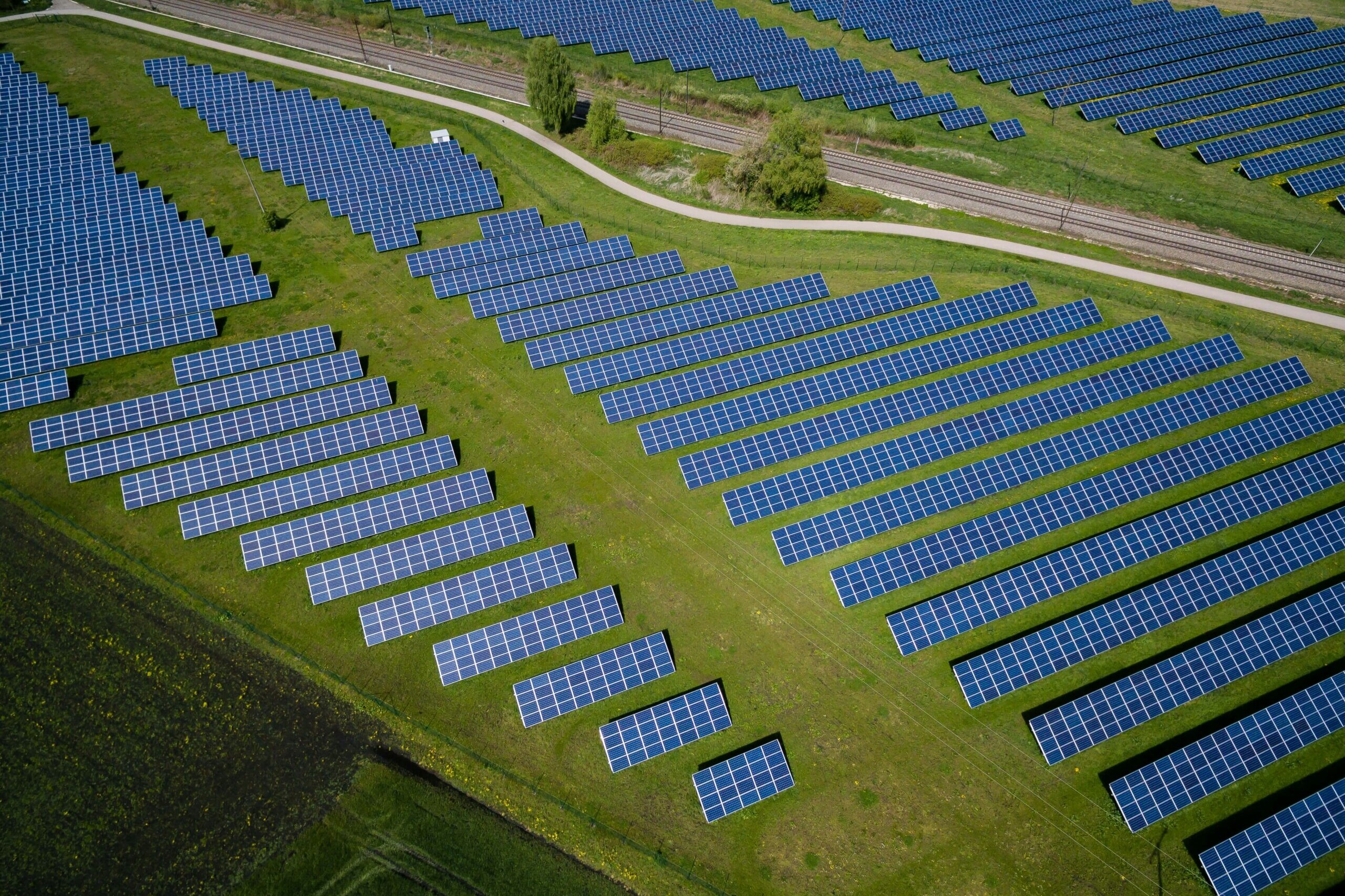
North Carolina has cemented its place as one of the top utility-scale solar markets in the United States, and 2026 brings an important set of legal and regulatory requirements that every project owner, developer, and installation partner needs to understand. From decommissioning mandates and interconnection rules to the state’s clean energy portfolio standard, the regulatory landscape has grown more structured and more consequential than ever.
At Ansgar Solar, we work alongside developers and EPC contractors on large-scale solar farms across the Southeast. This guide breaks down the key laws governing utility-scale solar in North Carolina in 2026 so you can build with confidence and stay compliant from groundbreaking through end-of-life.
What Counts as a “Utility-Scale” Solar Project in NC?
Before diving into the regulations, it is worth defining the threshold. Under North Carolina law, a utility-scale solar project is one capable of generating two (2) or more megawatts alternating current (MW AC) that is directly connected to the local or regional electrical grid with the ability to deliver power to the grid. Projects below this threshold, or those primarily intended for the customer’s own on-site consumption, are generally subject to a different set of rules.
If your project meets or exceeds 2 MW AC and delivers power to the grid, the regulations below apply to you.
Key Law #1: Session Law 2023-58 and the DEQ Decommissioning Program
The most significant piece of legislation shaping utility-scale solar operations in North Carolina right now is Session Law 2023-58, which established a statewide decommissioning and financial assurance program administered by the North Carolina Department of Environmental Quality (DEQ).
What It Requires
The regulations require the owner of a utility-scale solar project capable of generating two or more MW AC that is directly connected to the electrical grid to properly decommission the project upon cessation of operations and restore the property, register with DEQ and pay a fee, and for new or rebuilt/expanded projects, submit a decommissioning plan and establish financial assurance.
The registration deadline for existing projects was November 1, 2025, and any new project must register with DEQ at least 90 days before construction begins.
Decommissioning Plans
The owner of a utility-scale solar project must submit a decommissioning plan for DEQ approval, prepared, signed, and sealed by a professional engineer licensed in the State. At a minimum, decommissioning includes disconnecting the solar project from the power grid. The plan must also detail material disposition, including recycling, reuse, or proper disposal of all components.
Decommissioning must be completed no later than one year following cessation of operations, with the owner required to notify DEQ within 30 days of cessation.
Financial Assurance
Owners must establish and maintain financial assurance in an amount approved by DEQ. The rules, codified at 15A NCAC 01V (effective April 1, 2025), set out registration fees, the required content of decommissioning plans, and detailed financial assurance mechanism requirements.
Local Government Overlay
Local governments and landowners may establish requirements that are more stringent than those set forth in the statute for decommissioning and financial assurance for projects in their control. This means project owners developing sites in counties that have adopted their own ordinances need to review both state and local requirements carefully.
Key Law #2: The Landfill Disposal Ban on Solar Modules (Effective December 1, 2026)
One of the most operationally meaningful deadlines of 2026 takes effect at the end of the year. As of December 1, 2026, North Carolina law officially prohibits the disposal of solar (photovoltaic) modules in unlined landfills, stemming from Session Law 2023-137 (H600).
Section 19.(a) of Session Law 2023-137 revises G.S. 130A-309.10 to prohibit the disposal of photovoltaic modules, or components thereof, in a sanitary landfill for the disposal of construction and demolition debris waste that is unlined, or in any other landfill that is unlined, in North Carolina.
In practice, this means decommissioning plans submitted to DEQ must include a credible recycling or certified disposal pathway for solar panels. Project owners should verify that their installation contractor and eventual decommissioning partner can document panel certification (such as UL 1703 or UL 61730) and provide a take-back or certified recycling program.
Key Law #3: Certificate of Public Convenience and Necessity (CPCN)
Any utility-scale solar project generating more than 2 MW that will sell power to the grid must obtain a Certificate of Public Convenience and Necessity (CPCN) from the North Carolina Utilities Commission (NCUC) before construction begins.
Generating facilities under 2 MW that are fueled by a renewable energy resource and are primarily for self-generation are exempt from the CPCN requirement and must instead submit a Report of Proposed Construction to the NCUC and provide a copy to the interconnecting utility prior to construction.
For projects above 2 MW connected to the transmission grid, FERC jurisdiction governs the interconnection process rather than NCUC’s distribution interconnection standards.
Key Law #4: Interconnection Standards and FERC Oversight
Utility-scale solar projects selling power at wholesale are regulated by the Federal Energy Regulatory Commission (FERC). The FERC provides market-based rate authorization, which allows utility-scale solar developers in North Carolina to sell electricity at competitive market prices without having to justify their rates on a cost basis.
For projects connecting at the distribution level (under 2 MW), the NCUC interconnection standards apply, which follow a three-tiered review process modeled on FERC’s small generator interconnection procedures. The FERC fee structure applies to the interconnection of systems over 2 MW. Additionally, systems in the Study Process must pay a deposit of $20,000 plus $1 per kW-AC, not to exceed $100,000.
PURPA and Avoided Cost
Under PURPA, utilities must pay for power purchased from qualifying facilities at their “avoided cost,” meaning what it would have cost them to generate that electricity themselves or purchase it elsewhere. This federal law has been crucial for North Carolina’s solar industry because it guarantees independent solar developers a market for their electricity.
Key Law #5: The Clean Energy and Energy Efficiency Portfolio Standard (CEPS)
North Carolina was the first state in the Southeast to mandate that utilities generate power from renewable sources. The original Renewable Energy and Energy Efficiency Portfolio Standard (REPS), established in 2007 under Session Law 2007-397, was expanded by the General Assembly in October 2023 through Session Law 2023-138 into what is now the Clean Energy and Energy Efficiency Portfolio Standard (CEPS).
Under the laws, investor-owned utilities in North Carolina are required to meet up to 12.5% of their energy needs through clean energy resources or energy efficiency measures. Rural electric cooperatives and municipal electric suppliers are subject to a 10% CEPS requirement.
Clean energy resources include nuclear, solar electric, solar thermal, wind, hydropower, geothermal, ocean current or wave energy, biomass resources, waste heat derived from a renewable energy resource, and hydrogen derived from a renewable energy resource.
This standard is a primary demand driver for utility-scale solar procurement in North Carolina, and developers who can deliver reliable, large-scale power output benefit directly from utilities’ need to meet CEPS compliance targets.
Key Law #6: House Bill 951 and the Carbon Reduction Goals
Passed in 2021 and continuing to shape the planning horizon for all major solar projects, House Bill 951 set a goal of 70% carbon reduction by 2030 and carbon neutrality by 2050 for North Carolina’s electricity sector. House Bill 951: Energy Solutions for NC established a goal of 70% carbon reduction by 2030 and carbon neutrality by 2050 for the electricity sector.
These targets drive utility Integrated Resource Plans (IRPs) and ongoing NCUC dockets, making the pipeline for utility-scale solar projects robust through the end of the decade and well beyond.
Federal Incentives Still in Play for Utility-Scale Projects
While the 30% residential Investment Tax Credit (Section 25D) expired at the end of 2025, the commercial ITC under Section 48E remains available for utility-scale solar. The Section 48E credit applies to commercial and business installations with a July 4, 2026 construction start deadline and a December 31, 2027 placed-in-service deadline.
For projects that can clear the construction commencement deadline, this credit remains one of the most powerful tools for improving project economics. Developers and their tax counsel should confirm that their construction timeline and financial documentation satisfy IRS “beginning of construction” requirements.
What This Means for Your Next Project
Whether you are a project developer, a utility, or an EPC contractor managing a large solar installation in North Carolina, the regulatory environment in 2026 rewards thorough planning and the right installation partner. Here is what should be on your checklist:
Before Construction
- Obtain a CPCN from the NCUC if generating more than 2 MW AC
- Register with NC DEQ at least 90 days before breaking ground
- Engage a licensed PE to prepare your decommissioning plan for DEQ approval
- Establish and document your financial assurance mechanism
- Review county-level ordinances for any more stringent local decommissioning rules
- Confirm your interconnection pathway and fee deposit with the serving utility
During Construction
- Maintain OSHA compliance on all work sites
- Confirm that all panel components are UL-certified for purposes of future disposal documentation
- Keep DEQ registration and decommissioning documentation current
At End of Life
- Notify DEQ within 30 days of cessation of operations
- Complete decommissioning and site restoration within one year
- Ensure all photovoltaic modules are routed through a certified recycling or take-back program, not landfills, in compliance with the December 1, 2026 disposal ban
Why Your Installation Partner Matters
North Carolina’s evolving regulatory requirements make the quality of your mechanical installation more important than ever. A properly installed solar array, from pile driving through tracker system installation and module installation, is the foundation of a long-lived, high-performing asset. Poor installation practices drive up maintenance costs, shorten asset life, and complicate the decommissioning process years down the road.
At Ansgar Solar, we specialize in the full range of mechanical installation services for utility-scale solar projects. Our teams are OSHA-certified, our front-line leadership holds active safety credentials, and our quality assurance process includes detailed inspections at every stage. We work across a wide range of geographies and site conditions, giving developers the flexible, experienced workforce they need to execute on schedule.
Learn more about our services or contact our team to discuss how Ansgar Solar can support your next North Carolina project.
Stay Current on North Carolina Solar Law
Regulations continue to evolve. The NCUC regularly issues orders on interconnection standards and net metering compensation, the General Assembly continues to debate property tax treatment and additional clean energy legislation, and DEQ’s USSP Decommissioning Program publishes updates as registration and enforcement ramp up. Bookmark the NC DEQ Utility-Scale Solar Decommissioning Program page and the NCUC CEPS page for authoritative, up-to-date information.
For construction and installation expertise you can rely on throughout the project lifecycle, reach out to Ansgar Solar today.
This blog post is for informational purposes only and does not constitute legal advice. Consult qualified legal counsel and the relevant regulatory agencies for guidance specific to your project.